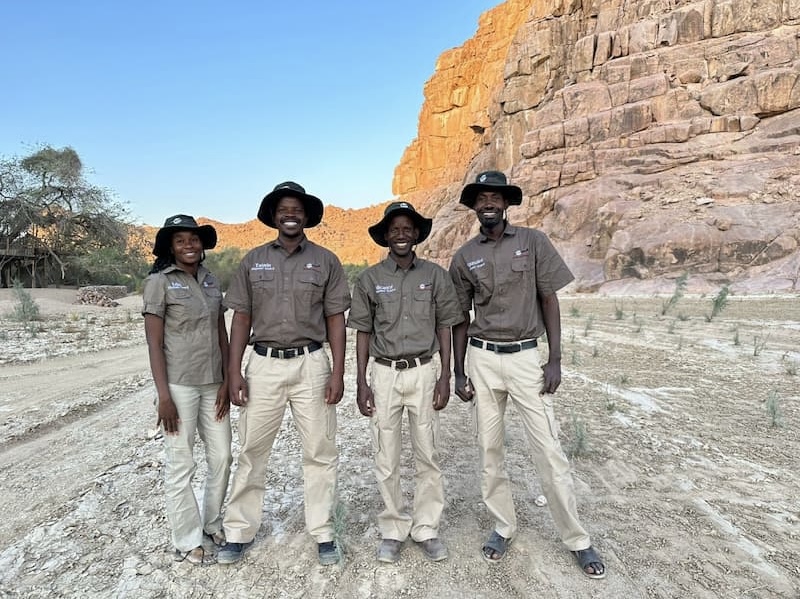
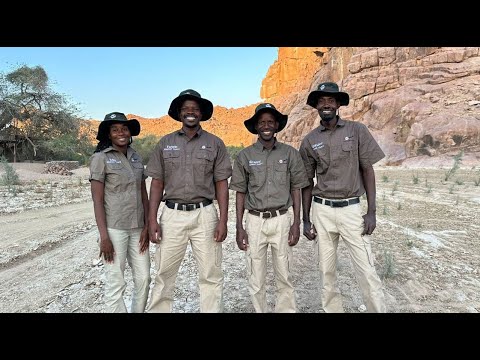
Behind every safe encounter is someone paying attention. EHRA’s Elephant Guards are local leaders who monitor movements, respond to conflict, and help communities live alongside elephants with more confidence and less risk.
Protecting Lives. On Both Sides.
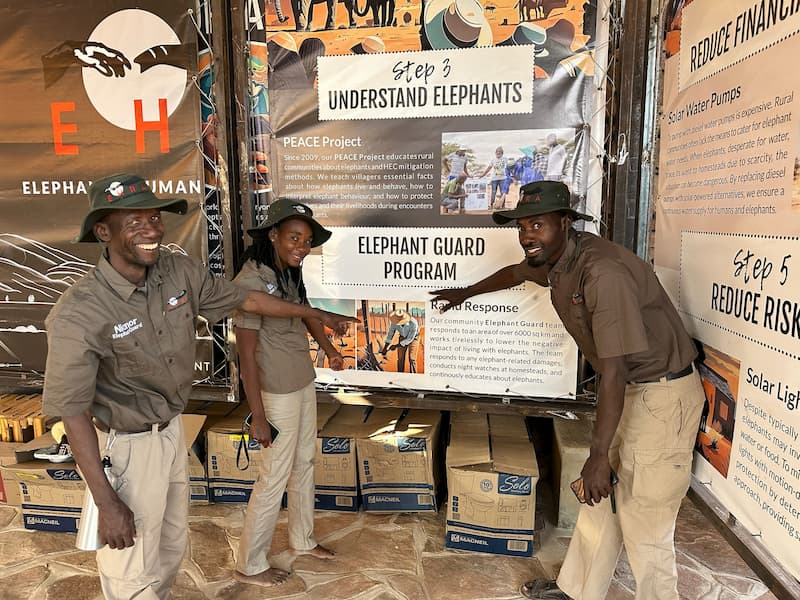
The Community Elephant Guard Program trains and supports local leaders to act as first responders to human-elephant conflict while promoting long-term coexistence.
These dedicated Elephant Guards play a crucial role in monitoring elephant movements and implementing EHRA’s Elephant Alert System, helping communities stay informed and prepared. By working directly with their communities, the Guards mediate conflicts, provide real-time solutions, and ensure local voices are heard in decision-making. Their presence strengthens coexistence strategies, reduces risks for both people and elephants, and fosters a sustainable future for all.
Elephant Guards in Action
The vision of EHRA’s Elephant Guard Program is to provide immediate support during human-elephant conflicts while empowering communities to implement long-term coexistence solutions. By fostering self-reliance, the program ensures its sustainability and lasting impact.
A GOSCAR for Conservation
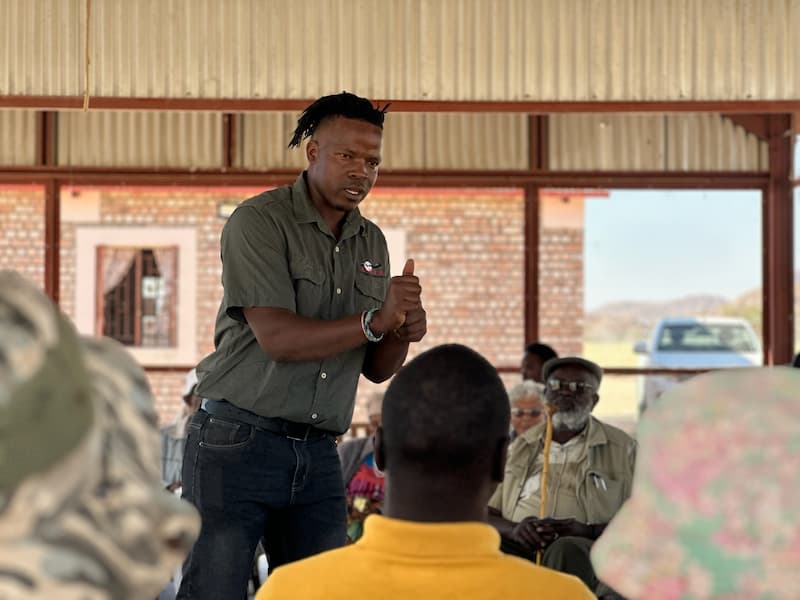
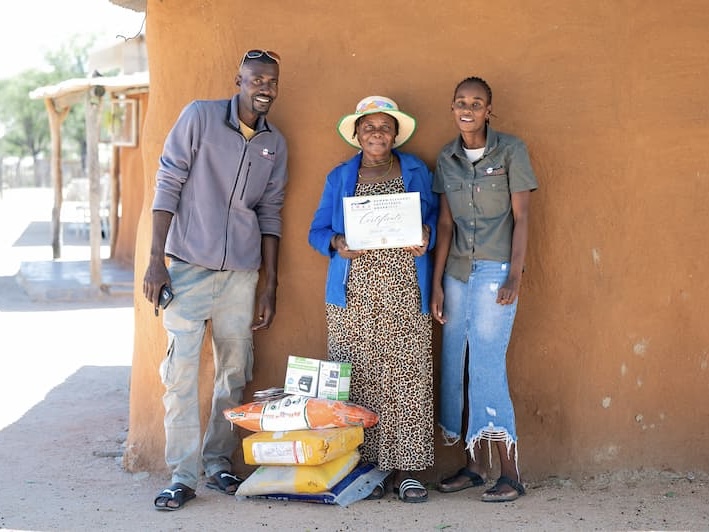
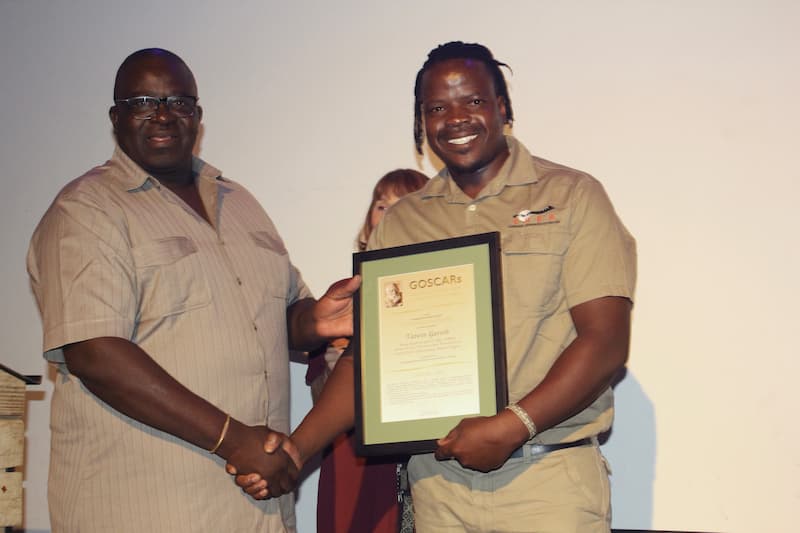
EHRA’s Head Elephant Guard West, Taiwin Garoeb, was recognised with a GOSCAR (Grassroots Owen-Smith Conservation) award for his outstanding contribution to human-elephant coexistence.
Taiwin leads a small but highly effective team working across the Kunene Region, supporting communities living alongside desert-adapted elephants. Over the past three years, he has personally reached hundreds of rural residents, sharing practical, safe and sustainable ways to live with elephants.
From responding to late-night calls and assisting vulnerable community members, to finding locally accessible solutions that help prevent conflict, his work is grounded, consistent and deeply connected to the people he serves. He’s also known for his problem-solving mindset, including introducing creative approaches like using “angry bee” deterrent sounds to safely guide elephants away from farms.
Choose whether to allow optional website statistics and embedded maps or videos. Essential cookies keep the website working. You can change your choices at any time.