EHRA’s Elephant Safety Outreach programs started in 2009 when the educational PEACE Project got launched. Rural community members requested to learn more about elephants, their behaviour, their anatomy and how to stay safe around them. The project has since focused to educate adults and school learners about human-elephant conflict mitigation strategies, and we expanded by training and employing Community Elephant Guards, and establish an Elephant Alert System.
peace workshops
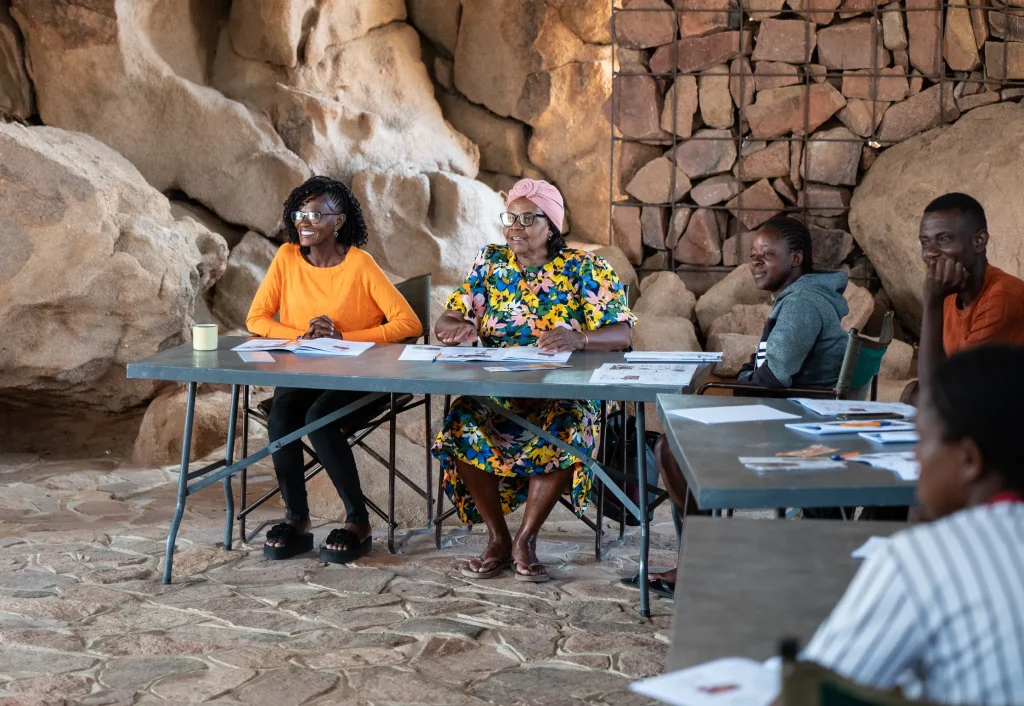
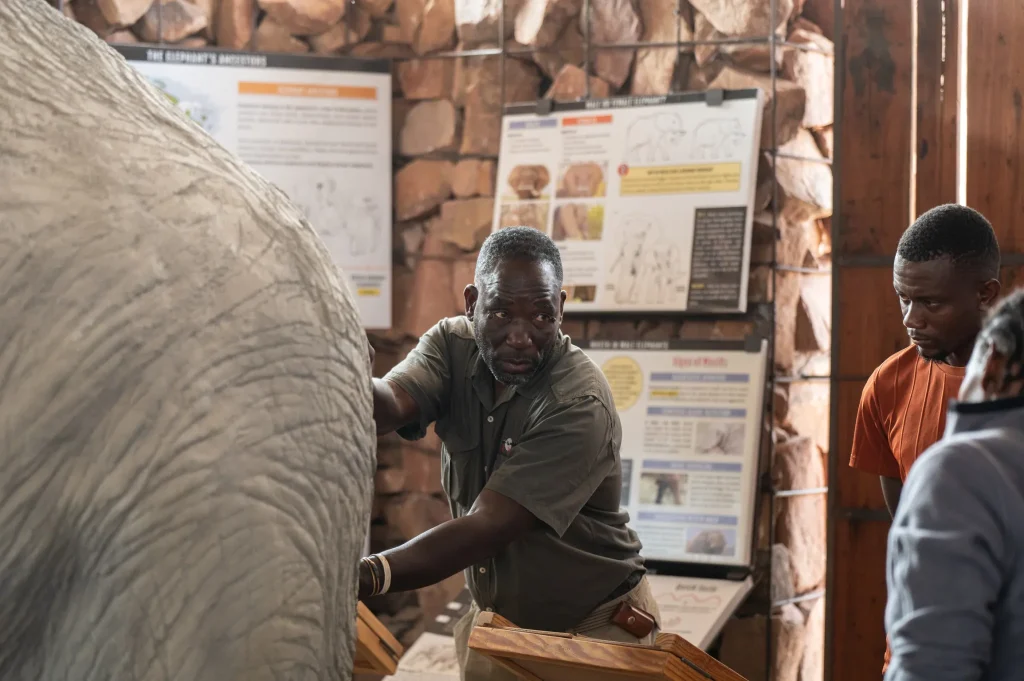
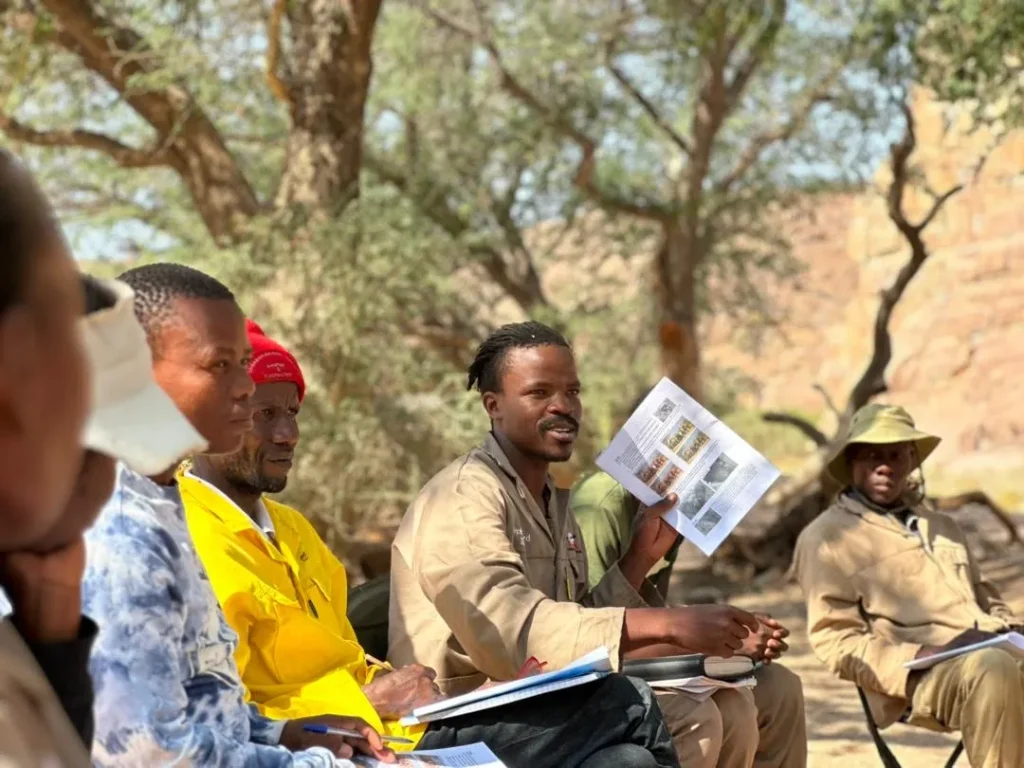
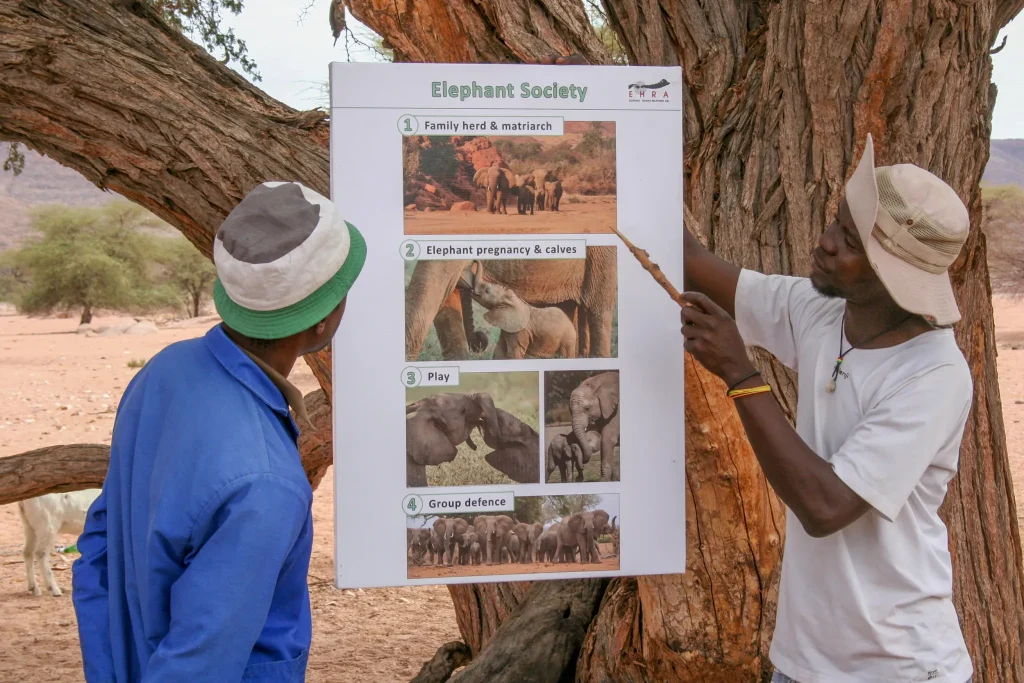
The PEACE Project (People and Elephants Amicably Co-Existing) provides hands-on training to rural communities, teaching them how to react safely when encountering elephants. This initiative equips participants with practical skills to reduce fear, prevent conflicts, and foster a deeper understanding of elephant behavior.
The project usually hosts groups of up to 20 people for three days at our Education Center and includes a practical field day to expose people to the elephants. The latter is often the first positive experience people have with elephants and changes the perspective positively.
VOICES FROM THE PROJECT
“I was walking with two friends in the field when we bumped into elephants. Being scared, my friends wanted to run away, but I remembered what Taiwin (Elephant Guard) taught me. He said to never run away, since you don’t know if more elephants are around. So, I stopped my friends from running and we climbed a hill instead. On top of the hill, we saw we were surrounded by elephants. The knowledge from the PEACE Project maybe saved our lives that day.”
Mr Sarob, Farm Arbeid
“The PEACE Project changed the whole picture of how I believed an elephant was before coming here. I learned about the zones and distance I should keep from an elephant, as well as how to read their reactions. The PEACE Project really helped.”
Mr Lawrence, Omatjete Area
“People in my village think that the elephant is a harmful thing, that it will hurt you if it sees you. I now learned that this is not true. We saw the elephants and they are so peaceful.”
Angelica Kameho, Omatjete Area
EDUCATIONAL RESOURCES
Download our Conflict Mitigation Workshop Manual for more insights on reducing human-elephant conflict.
Conflict mitigation is made possible by the generous support of the International Elephant Foundation, Aktionsgemeinschaft Artenschutz e.V. and Berlin Zoo.
Cookie Consent
Choose whether to allow optional website statistics and embedded maps or videos. Essential cookies keep the website working. You can change your choices at any time.