
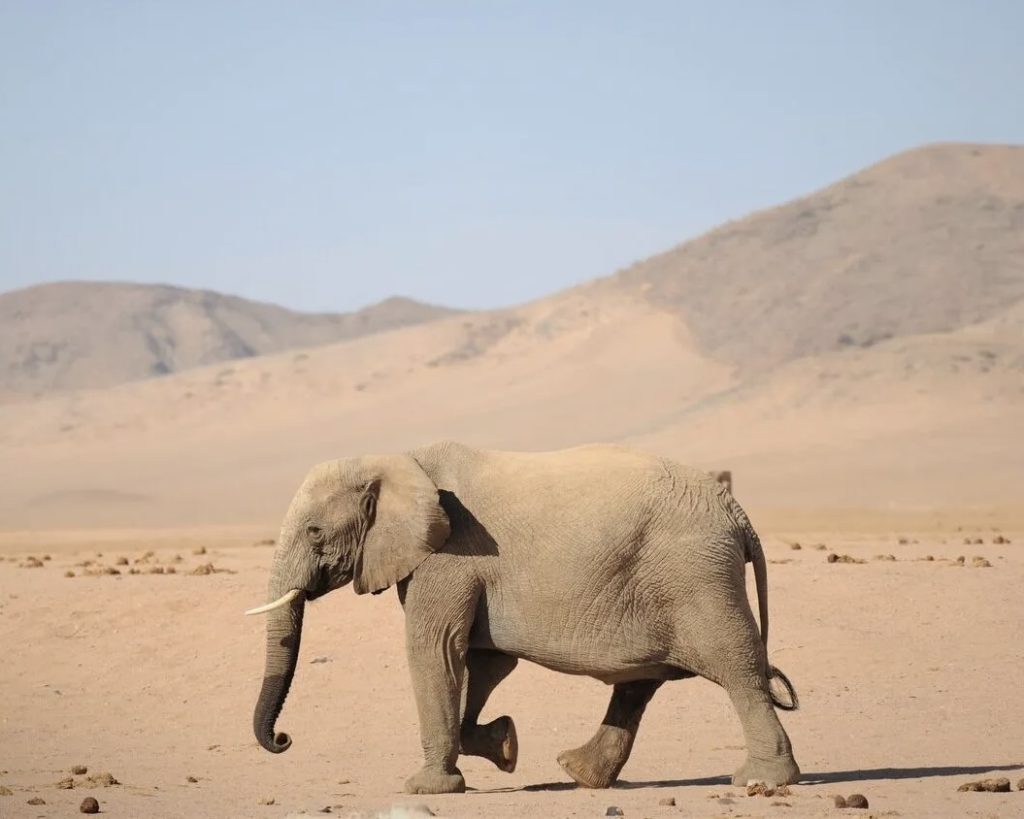
An impossible place for an elephant
Picture a riverbed with no river in it. A wide channel of sand winds through the desert; the midday heat is fierce, and the nearest reliable rain might be months away.
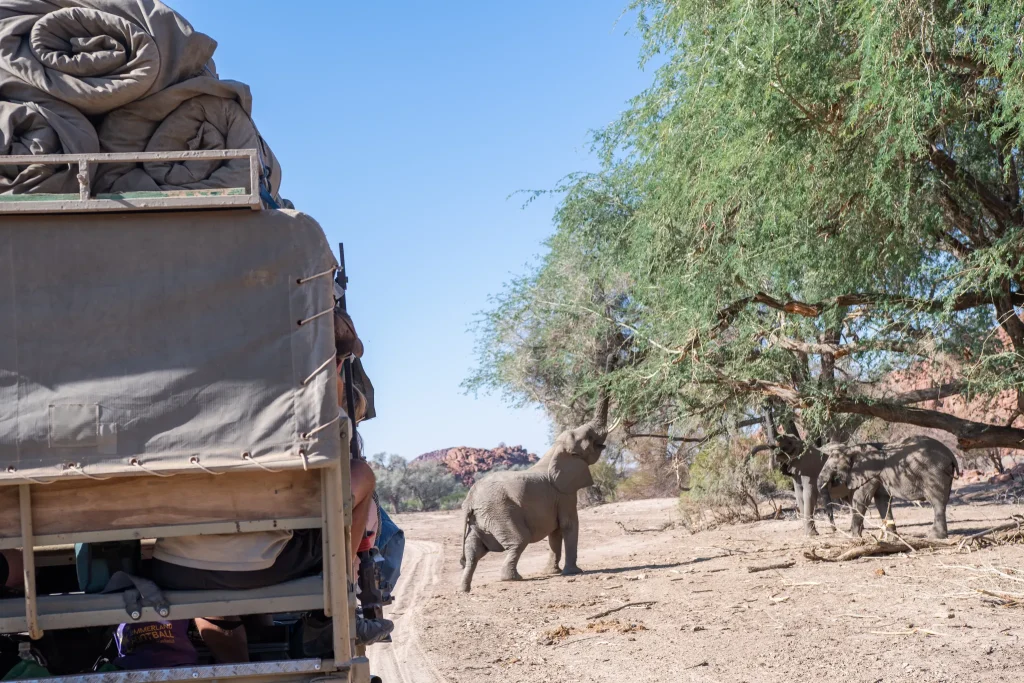
Then, around a bend, a line of grey shapes appears: a family of elephants, walking slowly and calmly, as if they own the place.
In a way, they do. In Namibia’s far northwest, in the Kunene and Erongo regions, lives a small population of elephants that has learned to survive in one of the driest landscapes on Earth. An adult elephant can need well over 100 litres of water a day and hundreds of kilograms of food. So how does the largest land animal on the planet make a living in a desert?
The answer is a mix of toughness, clever behaviour and something harder to measure: knowledge, handed down through generations.
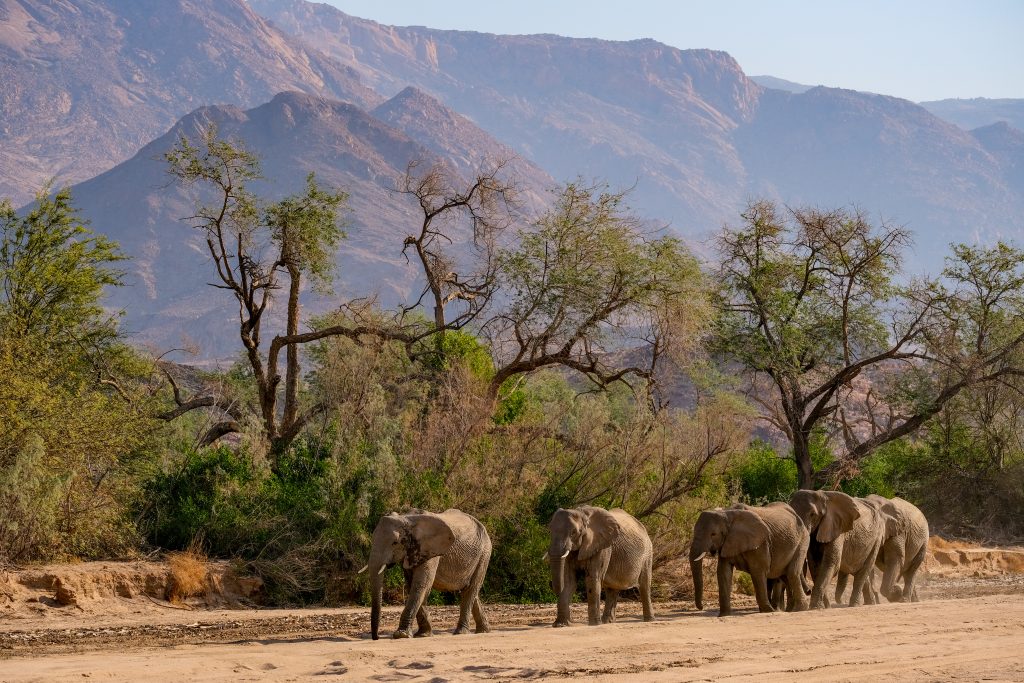
Same elephant, different life
Here’s the surprising part: desert elephants are not a separate species. They are African savanna elephants, the same kind you’d see in Etosha or the Okavango. What sets them apart is how they live, not their genes.
That makes them special. Namibia is one of only two places in the world where desert-adapted elephants are known to live. The other is Mali, on the southern edge of the Sahara.
Think of it less as evolution and more as culture. These elephants survive because they have learned where to go, when to go, and how to behave in a place that punishes mistakes.
Life along rivers that rarely flow
The secret to the desert elephants’ world is its ephemeral rivers. Riverbeds like the Ugab, Huab, Hoanib and Hoarusib cut westward toward the Atlantic. Most of the year they are dry, and some only flow for a few days after rare storms inland.
But “dry” is misleading. Water lingers beneath the sand, and it feeds narrow green corridors of ana trees, camelthorn, mopane and reeds. These ribbons of life are where the elephants spend most of their time, moving between patches of food and hidden water.
The elephants roam remarkably far. Some have even been seen walking out through the Skeleton Coast and onto the beach, right to the edge of the ocean.
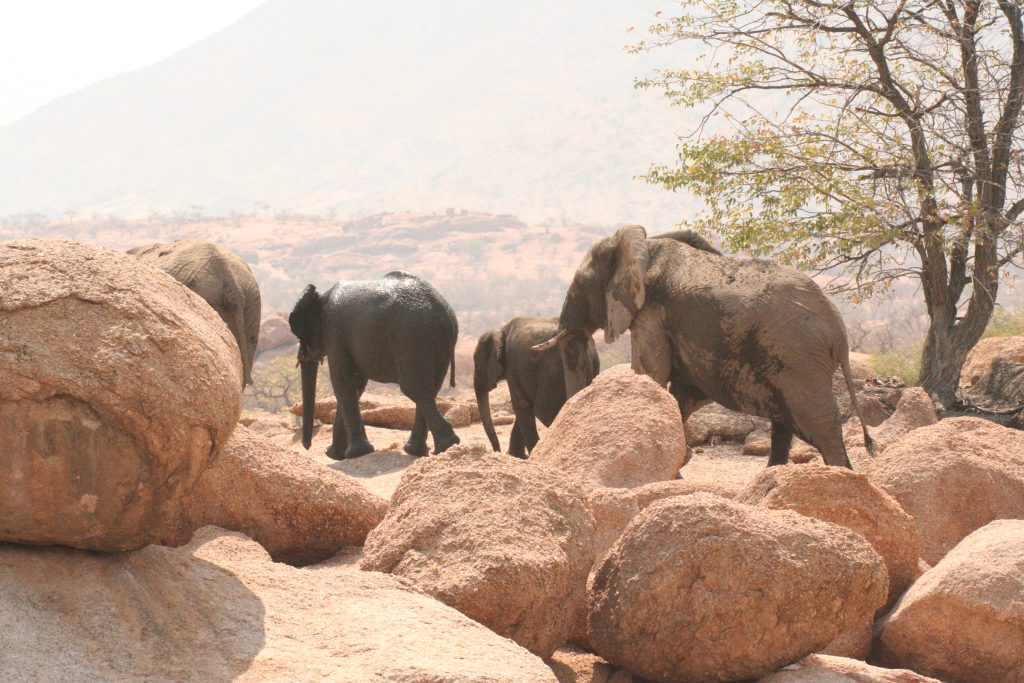
How they find (and save) water
Rainfall in their range is often under 100 mm a year. To cope, the elephants have a toolkit of survival tricks.
- Digging for water. They use their feet and trunks to dig into the sand of riverbeds, reaching water hidden below the surface. Other animals then drink from these holes, so the elephants act as engineers for the whole ecosystem.
- Going without. They can go several days without drinking, far longer than elephants in wetter areas usually do.
- A built-in water flask. Elephants have a pouch in the throat that can hold water, which they may draw on with their trunks when needed.
- Travelling far. Herds cover huge distances between feeding and drinking spots, sometimes walking through the night when it’s cooler.
- Eating gently. Desert elephants are known for being careful foragers. They tend to browse without destroying trees, which matters in a place where every tree is precious.
Memory: the greatest adaptation of all
Of all their tricks, the most important might be the one you can’t see. Namibian zoologist Dr Malan Lindeque, who specialises in elephant population ecology, has pointed to memory as their single most vital adaptation.
Elephant families are led by matriarchs, usually the oldest females. Over decades, a matriarch builds a mental map of her world: which springs hold water in a drought, which valleys have food after rain, which routes are safe. Some of that knowledge might only be needed once every five or ten years, when a severe drought hits.
Young elephants learn by following. Every journey is a lesson. That’s why losing an older elephant, whether to hunting, conflict or drought, is so damaging. When a matriarch dies, a library of survival knowledge can die with her.
Brought back from the brink
These elephants have survived more than the desert. In the early 1900s, around 3,000 elephants are thought to have roamed the Kunene region. By the 1980s, ivory poaching and hunting during the years of conflict had cut that to roughly 300. For a time, elephants disappeared completely from parts of their range, including the Ugab River.
Then came a turnaround. After independence in 1990, Namibia gave rural communities legal rights to manage and benefit from wildlife through community conservancies. Suddenly, a living elephant was worth more than a dead one. By around 2013, elephant numbers in the region had roughly doubled to about 600, and herds had returned to rivers they’d abandoned.
Today, many local people work as trackers, guides and community game guards, and elephant tourism brings income to villages that share the land with them.
The challenges they face today
Living alongside people:
When food and water run short, elephants turn up at farms and villages. They can damage water tanks, pipes and gardens, and people’s livelihoods and safety are genuinely at stake. At EHRA, much of our work is helping both sides live together, including building protective walls around community water points.
Drought:
Researchers have noted that years of drought in northwest Namibia since 2013 have increased competition between people and wildlife, putting pressure on the goodwill that conservancies built.
The hunting debate:
Trophy hunting quotas for elephants in the region are hotly contested. Some conservationists argue that removing big bulls threatens an already small population. Namibian officials have maintained that the numbers taken are conservative and sustainable, and that hunting income supports communities and conservation.
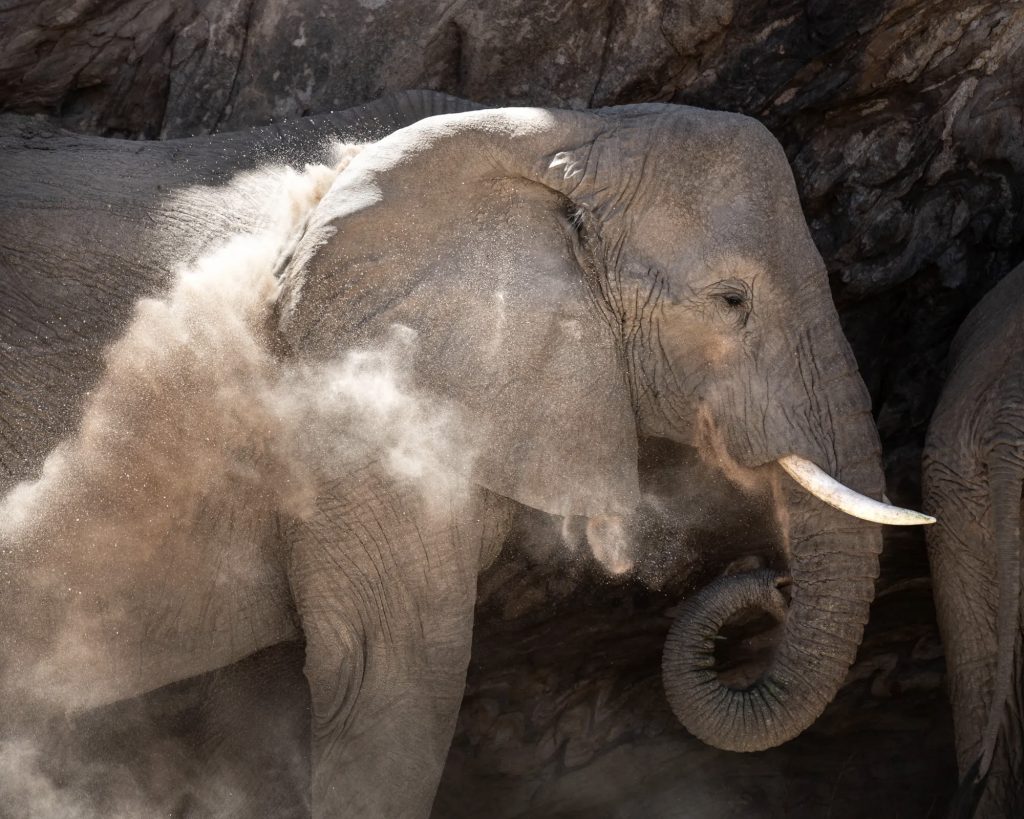
Seeing them responsibly
Tracking desert elephants is on many travellers’ Namibia wish lists. If you go, a few habits make a big difference:
- Go with a local guide. Community trackers know the herds and their moods, and your money supports the people who live with the elephants.
- Keep your distance. Give the elephants plenty of space and never block their path, especially near water.
- Stay on existing tracks. Desert soils and plants take years to recover from tyre marks.
- Be quiet and patient. Switch off the engine, skip the hooting, and let the elephants set the pace.
- Support the work. Here at EHRA, we run research, community education and water-point protection projects, and there are ways to get involved.
Why they Matter
Namibia’s desert elephants remind us that survival is about knowledge, learned slowly and passed on carefully. Every herd walking down a dry riverbed carries a map of the desert in its collective memory.
Protecting them means protecting that memory, and the people who share the land with them. That’s the work we do every day at EHRA. If we get it right, the grey giants of the dry rivers will keep walking where no elephant should be able to live.